Search This Blog

Sunday, 30 June 2013

Mrs Smith's Room 17 students showed Aroha within our school with enthusiasm and a caring attitude.  They asked our Sustainable Team of teachers and students what they could do to help in our gully.  Our gully restoration has been in progress for many years with substantial plantings happening in 2001.  Our boardwalk is a great way to view the gully and listen to the many birds that now visit our gully.  In teams, Room 17 planted six native trees and then cleared the slippery boardwalk. This will help all our students when they are doing visitor tours and further planting.


Monday, 24 June 2013


The students in the Year 3 and 4 Sustainable
Elective have continued their scientific learning
about the importance of honeybees.  When you read their informative  glossaries, you will see words like, insect, proboscis, antennae, waggle
dance, pollination and worker bee explained in
scientific language.

During their study, students have also enjoyed
cooking their own healthy, tasty foods like
Honey Glazed Carrots.  They know that
worker honeybees visit different flowers to
get the nectar that makes different tasting honey.
They have tried Manuka Honey, Rata Honey,
Clover Honey and Mixed Floral Honey.  Each
honey had its own special taste.

The students know that honey is delicious but
that the most important thing about honeybees
is that they are the best pollinators of flowers.
Most flowering plants need pollen from another
flower of the same kind to make new seeds.
When the honeybees are sipping nectar, they
collect pollen (male part of the flower) in their
pollen sacks and when they visit another flower
the pollen is dropped on to the flower.  When
the flower dies, seeds have been made to start
new plants.

Using the digital microscopes, students saw a
variety of insects up close and flowers.
On the flowers, we could see the pollen and the
female part of the flower.  We found out that if
we didn't have honeybees pollinating our
flowers, we would have 70% less food plants
available to eat.

Our caring thinking in this elective was to
decide what we could do to help the honeybees
survive.  Our learning showed us that honeybees
don't like inorganic sprays, that in the winter
honeybees can't always find enough flowers to
sip nectar from and that they need water and a
safe home.


 We decided to make posters that can let other people
know why honeybees are important and how we can
help them at school and at home.

We will be hanging our posters around our school.
Look out for these brightly coloured and very
informative posters.


Monday, 3 June 2013


Arbor Day
On Friday 31 May thirty-nine Hukanui Students, along with our wonderful parent helpers attended Waiwhakareke wetland (near the Hamilton Zoo) to help plant 25 000 native trees. Over 1500 people attended this annual planting day.  Our parents and students, showed great teamwork, dedication and careful planting techniques to contribute to this wonderful community event.  Arbor Day (from the Latin arbor, meaning tree) is a day in which individuals and groups are encouraged to plant and care for trees. It originated in NebraskaUnited States by J. Sterling Morton. The first Arbor Day was held on 10 April 1872. An estimated one million trees were planted on this first Arbor Day.


Our Planting Team


Tuesday, 28 May 2013

The Year 5 and 6 Sustainable Elective have continued to develop their understanding of what Kai, Community and Sustainability means to them.  Through this learning, they are working in teams to grow vegetables for our school and community. We have five vegetable gardens and a growing orchard.  At the moment, we have carrots, celery and cauliflower growing and lemons ready to pick.  Some of the veggies won't be ready to eat by the end of our study, so we have been taste testing too.  We are very concerned about not wasting excess food, so we have come up with a plan.  Keep an eye
out for our creative plan.


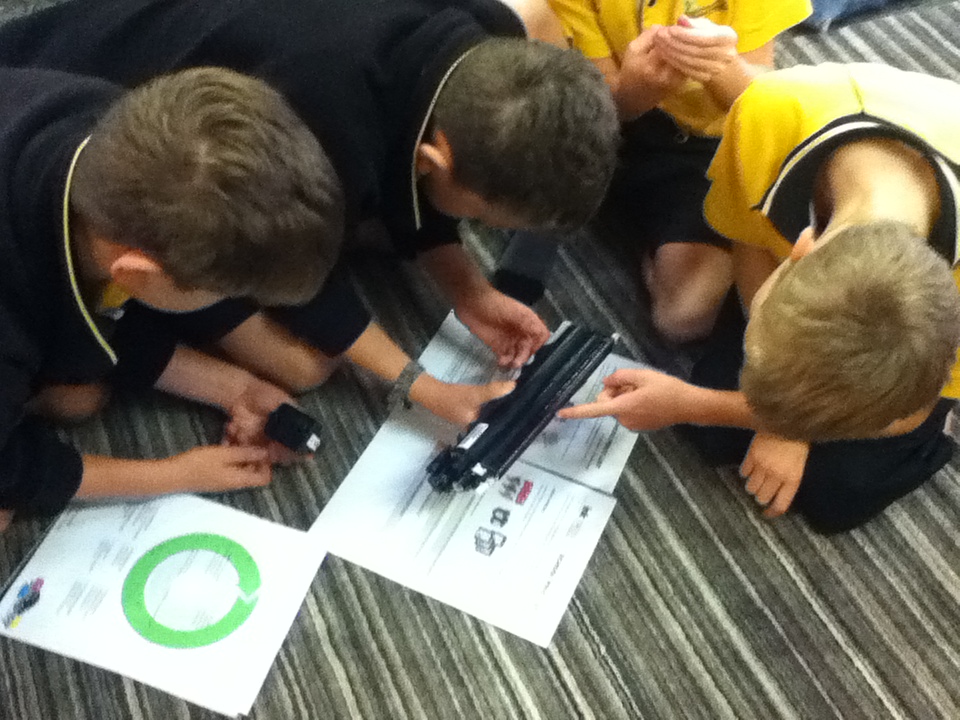
On Tuesday 21 May at the student breakfast meeting for the Living Room Specialist students, we were lucky to have a meeting with Tony McKenna from the Inkshop.  The Inkshop specialises in printer cartridges that have been recycled to 'as good as new' and sells them at a price that is a lot cheaper than the original product.  At our meeting, Tony explained the recycling process and how this helps to stop waste going into the landfill.  Our students learnt about the 'closed recycling process' and how we can collect cartridges at our school to recycle them and sell them back to The Inkshop.  The money we gain from this, we can put back into our sustainable projects.  We have been working with Tony over the last two years and we put money towards our garden shed and vegetables gardens.  


Thursday, 16 May 2013

Students in the Year 3 and 4 Sustainable Elective are learning about honeybees and how we can help them survive.  To do this we need to find out the scientific features of honeybees. All our students are scientists.  They are exploring the parts of a bee, including the proboscis used for sipping nectar from flowers and the antennae used for smelling, touching and tasting.   Each week, students record their information in their personal glossaries after experimenting and researching.

Exploring what it might be like to have a proboscis.


Bee watching looking for patterns of activity

Using the digital microscope to see the parts of insects up close.


Tasting different types of honey to compare tastes.  Honey sipped from different flowers is made into different honey by bees. We tasted Rata honey and Clover honey.  Clover honey was the most popular.


This is a smell test to see if we can identify the five different smells.  Bees
smell very accurately from long distances.


Thursday, 9 May 2013

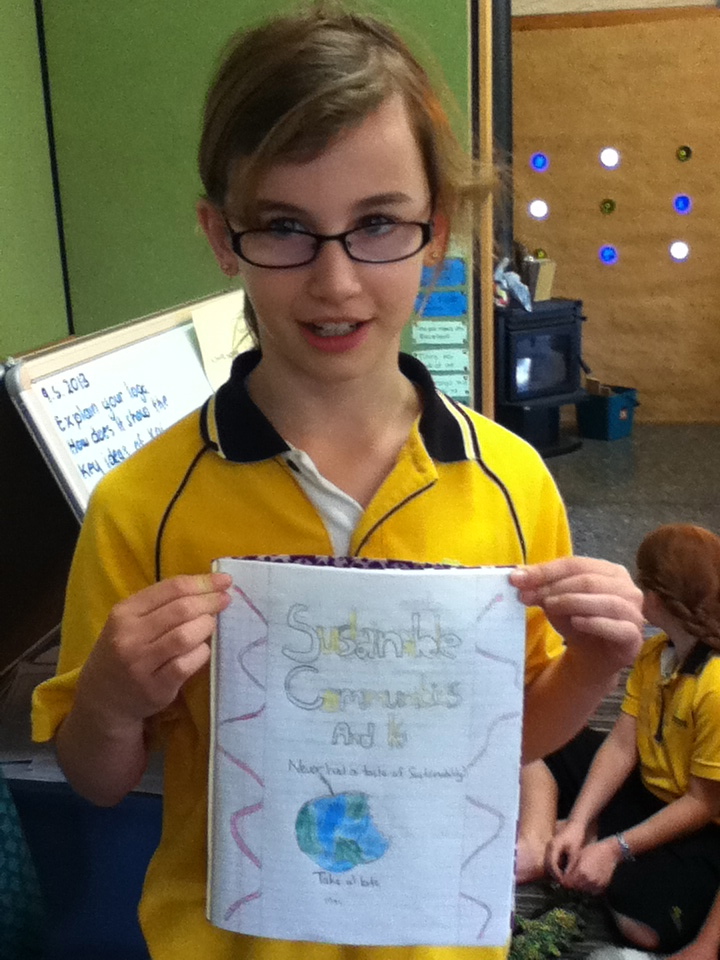
The students in the Year 5 and 6 Sustainable Elective have all been working on a logo that reflects the key concepts in our ongoing elective study.  These key concepts are Sustainability, Kia (food) and Community.  We learnt that a logo needs to be concise, give a lot of information from a simple picture, be bright and colourful and show our project so that everyone can understand it easily, even if they don't know about our project.  All the students looked at the logos and the journal entry that explained them and then used two votes to choose one logo.  It was a very close final decision with only one vote difference.  Congratulations to Abby and Maia.  Maia's creative and informative logo will be used for  our project, along with her message.

Journal Entry 9/5/13 By Maia
My logo is in the form of an apple.  It shows kai and sustainability because we grow fruit and vegetables.  The apple skin is patterned like the Earth and the Earth is our whole community.  If we all used sustainability, we could reduce our carbon footprint.  The apple has a bite out of it because I choose to use sustainability.  
The motto of my logo is - Never had a taste of sustainability?  Take a bite!