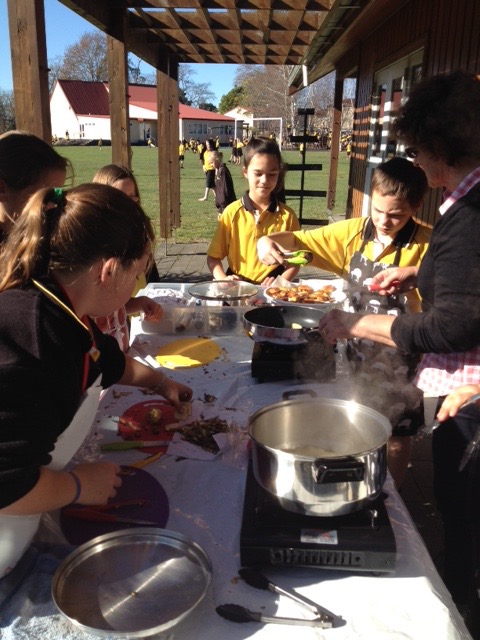
Our School Community Food Table has
been running for two years now and it has been very successful. Our aim was to give away excess fresh fruit,
vegetables and herbs from our school garden so that our families can use them in their cooking, or eat
them straight from the table. Families can donate to the table too. People don’t
have to donate to be able to take food from the table. We want the food to be
used so that it doesn’t get wasted. Our
table is available every Wednesday morning before school. What a wonderful way
of showing Aroha and sustainable practice. Thanks to our families for supporting our venture and contributing to our table. Enjoy!
Search This Blog
Monday, 31 August 2015
Monday, 10 August 2015
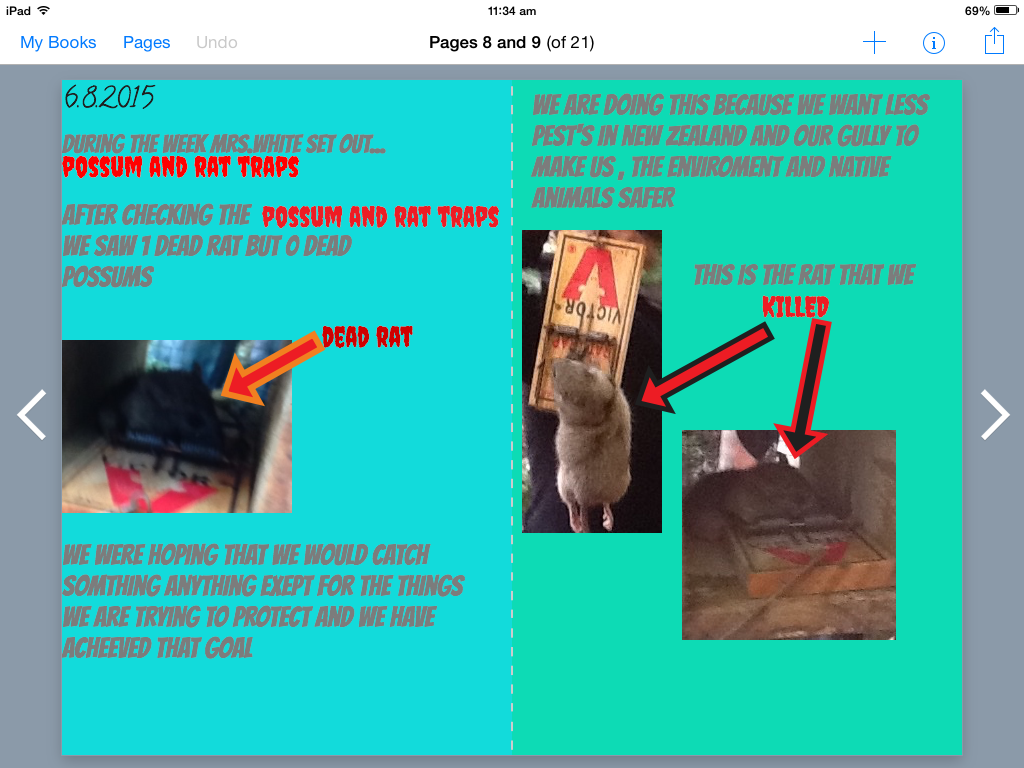
The students in this term's Year 5/6 Sustainable Elective have been learning about the creatures living in our school gully and the threats to them. After considerable consideration of alternatives and action, they have decided to trap exotic pests living in our gully so that they don't destroy the habitat, eat our insects like wets and bird eggs, or the chicks, lizards and seeds that will make the new plants. We have set up two possum traps and one rat track. So far we have caught one rat but no possums. We were hoping to trap possums too. By destroying these pests, we are making a safer environment for our native and endemic flora and fauna.
These student diary writings captures this so well.
Monday, 3 August 2015
Wow! What wonderful opportunities and life skills our students have the opportunity to develop at our school. Since Term 3 has begun, students in the Back Garden Seed Group have continued their great work in our gardens, weeding, pruning, planting, Community Table harvesting and general tidying up; all tasks that need to be developed when caring for a produce garden. Each week they have also been working in teams to cook freshly harvested food to share with our team. It is very rewarding to watch our students harvest, wash, cook, share and enjoy food in one session. They each get the current recipe and take it home to try with their families. We have had Thai Fried Rice, ginger beer and warm winter salad so far this term. It is with sincere thanks that we acknowledge the time and thought that Grandma Sharon puts into our programme each week, not only with her gardening and cooking skill but also sharing her knowledge of the history and ways to preserve food for the months they are not in season.
Yesterday two of our Tuesday Seed Group team members went over to Rhode Street School to attend a special presentation and to pick up four pear trees for our backyard garden. The trees come from a newly formed charitable trust, called the Avis Leeson Fruit Tree Trust. Avis is 80 now, and has devoted a large part of her life to providing and helping schools with the orchard and vegetable garden. She has helped our school a lot over the last five years. Yesterday, the trust gave away 1000 pear trees to schools and kindergartens. They have committed to the next ten years to give away 1000 trees each year. Once the trees are planted a data base will be set up to record there distribution. Our four pear trees will add great variety to our school orchard.
Wednesday, 29 July 2015
At this year's National Bee Conference (over 800 delegates), we entered the photo competition in the category 'Essay'. In this section, a series of photos tell a story. Mr Mossop took fantastic photos on one of the days our students were helping to work the hive. These photos were put together to tell the story of how our students are learning and caring for our honeybees and that in the future these children will understand the importance of honey bees as plant pollinators. We one first prize in this category.
The Year 5/6 Sustainable Elective developed their learning about the vital resource of water and how it is essential to all living things. They gained an understanding of the scientific thinking behind water flow, water molecules and states of matter. After observing and exploring our school for sources of water and water run off, they became interested in the Living Room mini wetland garden and its water feature, The Fountain of Power. A visit to Waiwhakareke Wetland in our Hamilton city consolidated their understanding about the importance of declining wetlands locally and globally. Wetlands are the kidneys of nature, storing and soaking up excess water and releasing it back with all the pollution particles destroyed by their helpful bacteria. Back at school, research was completed on the threatened and most important wetlands in the world and student iPad presentations were developed to increase the awareness of these special places. On a local front, student action was to make their own water flow models and to restore the Fountain of Power back to its original state. They also replanted the vegetable garden and looked at the percentage of water in different foods. This also developed the idea of making Hukanui Chutney and Pickle. What fantastic actions were initiated by our students.
Thursday, 23 July 2015
Term 2 saw the end of our Year 3/4 Honeybee Elective. In this elective our students gained real life experiences helping to care for our school's beehive. The aims of the elective were to understand the scientific features of honey bees, why they are important in our natural world and how we can care for them. Students learnt that honey bees are one of the many insects in our environment, the special features of a honey bee, its proboscis, honey stomach, antennae, head, thorax and abdomen, pollen baskets and antennae.
![]() |
| Searching for insects in our school environment |
![]() |
| Recording our weekly learning in a diary. |

Learning what to do when a honey bee lands on us, so they don't get scared and sting us. We keep calm, stand still and ask someone to carefully flick the honey bee off.
We have our honeybees so that they pollinate our flowers to make new seeds that will grow into plants. Did you know that more than 60% of the food that we eat relies on the honey bee to pollinate it? Even chocolate!
Caring for the beehive is very important. We harvested honey when the bees had covered the frame with wax and we 'wintered 'our bees down safely the cold season. We have a bee garden for winter which is an important food supply during the cold winter months when there are not many flowers to sip nectar from.
The most important reason for our honeybees is to pollinate our flowers. Honey is a bonus and we enjoyed using it in our cooking and ice block making.
Subscribe to:
Posts (Atom)